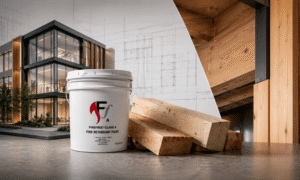

For more than 30 years, Firefree Coatings has specialized in developing and manufacturing advanced intumescent fire-retardant and fire-resistant coatings. Since 1994, intumescent technology has been the foundation of our products and one of the most effective tools available for passive fire protection.
But what exactly is intumescent technology, and why has it become so important in modern construction?
Understanding Intumescent Technology
The word “intumescent” comes from the Latin word intumescere, meaning “to swell.”That definition perfectly describes what happens when an intumescent coating is exposed to fire.
Under normal conditions, the coating remains stable and looks much like a conventional coating. However, when exposed to elevated temperatures, a controlled chemical reaction begins.
During this process:
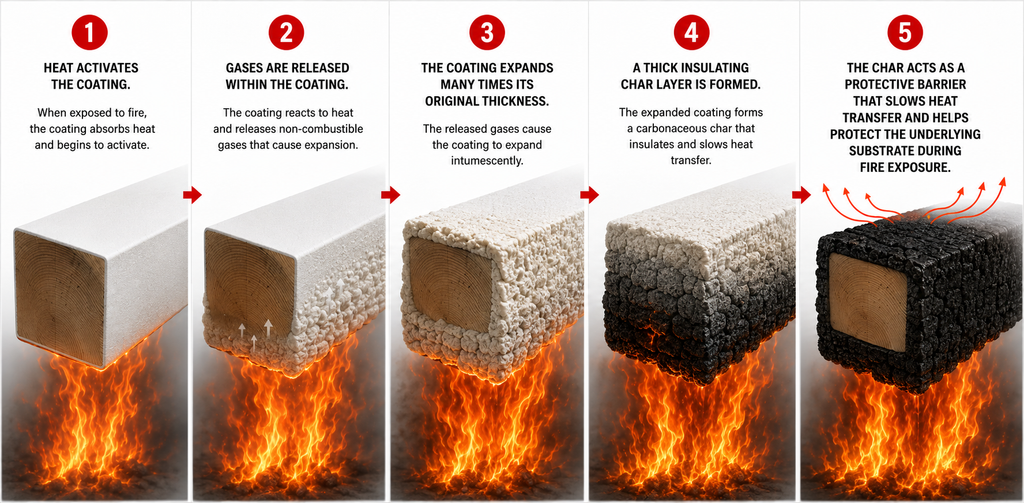
Think of it as a protective shield that remains dormant until it is needed. When exposed to fire, the coating automatically transforms into an insulating barrier designed to help reduce heat transfer and slow the progression of fire.
Unlike active fire protection systems such as sprinklers, alarms, or suppression equipment, intumescent coatings require no power source, moving parts, or human intervention. The protection is built directly into the coating itself and activates automatically when exposed to heat.
Why Is Intumescent Technology Important?
Many people associate fire damage with flames. In reality, heat is often responsible for much of the destruction caused during a fire.
As temperatures rise, building materials can weaken, deform, ignite, or lose their structural integrity. Heat can also spread throughout a structure long before direct flame contact occurs.
Intumescent technology helps address these challenges by:
- Reducing heat transfer
- Slowing flame spread
- Reducing heat release
- Limiting smoke development
- Helping contain fire to its area of origin
- Delaying structural failure
- Providing valuable time for evacuation and emergency response
In many situations, those additional minutes can make a critical difference in protecting lives, property, and essential infrastructure.
Fire-Retardant vs Fire-Resistant Coatings
Firefree Coatings develops both fire-resistant andfire-retardant coatings using advanced intumescent technology. While these terms are often used interchangeably, they serve different purposes and are evaluated using different fire testing standards.
Here is what you need to know about them:
Firefree Product Examples:
Firefree 88® (FF88)
Helps maintain assembly performance during fire exposure.
- ICC-ES Full-Scale ASTM E119 Listed
- FM 4470 (NFPA 276) Approved
- UL #R14654 Classified on OSB, Douglas Fir
- Tested to ASTM E119
and other international fire-resistance standards
Firefree Class A (FFA)
Helps reduce flame spread and smoke development.
- ASTM E84 Class A
- ASTM E84 30-Minute Extended
- ICC-ES Listings
- California State Fire Marshal Listed
- CAN/ULC Evaluations
Firefree Products:
Firefree’s product portfolio includes:
- Firefree 88®– Fire-resistant intumescent coating
- Firefree Class A– Fire-retardant intumescent coating
- Firefree Exterior System– Wildfire protection coating system
Understanding the difference between fire-retardant and fire-resistant coatings is critical when selecting a fire protection solution. The appropriate system depends on the substrate, building assembly, applicable code requirements, and the level of fire performance required for the project.
Where Can Intumescent Coatings be Used?
One of the advantages of intumescent technology is its versatility.
Firefree coatings have been applied to a wide variety of substrates, including:










Note: All Firefree coatings are supplied in white. However, they can be tinted to your desired color at most local paint stores using standard tinting systems.
For additional information about product features, technical characteristics, testing data, certifications, and application guidelines, please visit our Product Pages.
Important Considerations
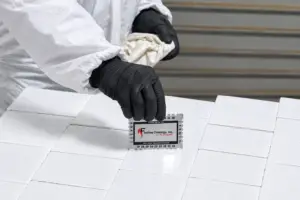
Like any fire protection system, intumescent coatings must be specified by the Firefree Coatings technical team, applied by a professional licensed contractor, and inspected by a third-party inspector.
Performance depends on factors such as:
- Substrate type
- Surface preparation
- Application thickness
- Environmental exposure
- Approved assemblies and testing requirements
The most effective solution is always one that has been selected and applied according to the specific project requirements.
Industries That Use Intumescent Technology
Over the past three decades, Firefree products have been used across a broad range of industries where fire protection and code compliance are critical.
These industries include:







Intumescent Coatings in Modern Construction and Design
Today’s architects, engineers, and building owners are looking for fire protection solutions that provide performance without sacrificing aesthetics.
Traditional fireproofing methods can add significant thickness, weight, or visual impact to a structure. Intumescent coatings offer a more versatile alternative by integrating fire protection directly into the coating system.
This makes them particularly attractive for:
- Exposed structural steel
- Architectural wood features
- Commercial interiors
- Public spaces
- Transportation facilities
- Modern mixed-use developments
By combining fire protection and design flexibility, intumescent technology has become an important component of contemporary construction.
Advantages of Intumescent Technology
There are several reasons why intumescent coatings have become a preferred fire protection solution across many industries:
- Passive protection that activates automatically during a fire
- No power source or mechanical activation required
- Minimal impact on architectural appearance
- Compatible with a variety of substrates
- Lightweight compared to many traditional fireproofing systems
- Suitable for complex shapes and detailed architectural elements
- Cost-Effective Solution
Common Misconceptions About Intumescent Technology
Myth #1: Intumescent coatings are fireproof
No coating is completely fireproof. Intumescent coatings are designed to improve fire performance and help protect substrates during fire exposure.
Myth #2: Intumescent coatings are only for steel
While structural steel is a common application, intumescent coatings can also be used on wood, gypsum board, concrete, composite materials, and other approved substrates.
Myth #3: Intumescent coatings replace all fire protection systems
Intumescent coatings are one component of a comprehensive fire protection strategy and are often used alongside detection, suppression, compartmentation, and other fire safety systems.
Firefree’s Approach to Intumescent Technology
At Firefree, intumescent technology is more than a product feature—it is the foundation of everything we do.
Our coatings are designed to provide effective fire protection while remaining environmentally responsible, water-based, and easy to apply.
For more than 30 years, Firefree has continued to advance intumescent technology through research, testing, and real-world applications, helping architects, contractors, building owners, and code officials meet modern fire protection challenges.