
Fire safety shapes every major decision in commercial building design. As a builder or architect, you already know that material selection directly affects how a structure reacts under fire exposure. Flame spread, smoke development, and structural stability all depend on what you specify at the design stage and how those materials perform under standardized fire conditions.
Wood brings structural flexibility and design value, but it also burns. This requires controlling fire behavior through tested protection systems. Building codes focus on limiting fire spread and protecting adjacent structures, especially in dense developments. When you use exposed or structural wood, you often need fire-resistant paint for wood as part of a tested system to meet regulatory requirements.
How Does Fire-Resistant Paint Work on Wood?
Fire-resistant paint for wood is a protective coating system that slows flame spread and reduces heat transfer into the substrate. You can use it as part of a passive fire protection strategy to improve how timber performs during a fire event without changing its appearance.
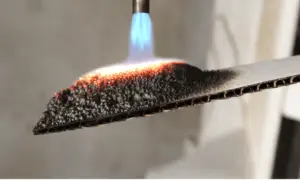
When temperatures rise, an intumescent coating reacts and expands into a char layer. This layer acts as an effective thermal barrier and shields the wood underneath from direct heat exposure. These coatings do not make wood non-combustible, but they do extend the time before ignition and structural failure.
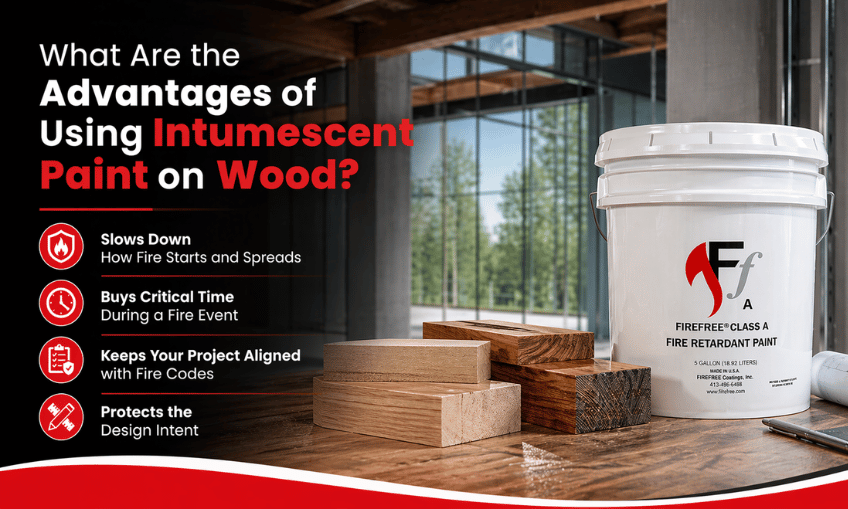
What Are the Advantages of Using Intumescent Paint on Wood?
Intumescent paint for wood is designed to improve the fire performance of timber surfaces and enhance building safety. Fire-resistant paint for wood does more than just add a layer on the surface. It changes how timber reacts when exposed to heat and flame, which directly impacts safety and compliance on site.
Slows Down How Fire Starts and Spreads
Instead of allowing wood to ignite quickly, a fire-rated paint for timber controls the initial reaction to heat. It reduces flame spread across the surface and improves overall fire performance, especially when evaluated under standards like ASTM E84.
Buys Critical Time During a Fire Event
Once exposed to high temperatures, an intumescent coating builds a char layer that slows heat transfer into the wood. That delay can make a real difference, giving occupants more time to exit and allowing fire response teams to act before structural elements weaken.
Keeps Your Project Aligned with Fire Codes
Using a tested wood fire protection paint system helps you stay on track with building regulations and fire safety standards such as NFPA 255. It also supports achieving higher classifications like Class A fire rating, where required.
Protects the Design Intent
In projects where exposed timber plays an important architectural role, a flame-retardant coating for wood construction lets you maintain that finish. You get fire protection without covering up the material or changing how it looks.
How Do You Apply Fire-Retardant Paint to Wood Surfaces?
As a builder or architect, you control specifications, execution quality, and compliance with fire safety solutions for wood structures.
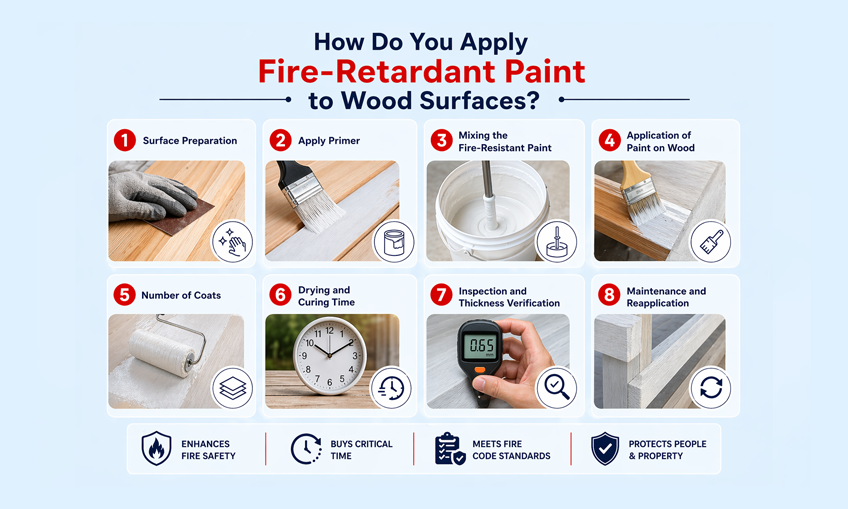
Surface Preparation
You define how the surface gets prepared before any wood fire protection paint goes on. The contractor needs to clean the wood thoroughly and remove dust, grease, oil, or old coatings. Sanding creates a uniform substrate for proper adhesion. If this step is rushed, even the best fire-resistant coating for wood will not perform as tested.
Apply Primer
You decide whether the selected system requires a primer. Some fire-rated paint for timber depends on a compatible primer to achieve the intended fire resistance rating. Skipping or mismatching this layer can lead to adhesion failure and reduce overall performance.
Mixing the Fire-Resistant Paint
You should ensure proper handling on-site. Fire-resistant paint for wood contains active compounds that settle over time, so consistent mixing becomes necessary. If the coating is not mixed correctly, the intumescent coating may not react uniformly under heat.
Application of Paint on Wood
You approve the application method based on the project scale and finish requirements. A brush, roller, or spray method can be used. Pay close attention to joints and edges, since these areas influence how the flame spread rating behaves during fire exposure.
Number of Coats
You link the number of coats directly to the required dry film thickness. This is not just about coverage; it defines how the coating performs as a thermal barrier. The best fire-resistant paint for wood only delivers results when applied to the specified thickness.
Drying and Curing Time
You need to account for curing in your project timeline. Temperature, humidity, and ventilation affect how the coating sets. If the system does not cure properly, the flame-retardant coating for wood construction will not achieve its tested fire resistance rating.
Inspection and Thickness Verification
This is where your role becomes important as a builder. You verify whether the applied system meets the required thickness using a wet film gauge and post-application checks. Without thickness control, substrate protection, and char layer formation cannot be guaranteed.
Maintenance and Reapplication
You should include maintenance as part of the building lifecycle plan. Fire-resistant coatings do not last indefinitely. Damage, wear, or exposure can affect performance. Periodic inspection ensures that the fire-resistant wood treatment continues to support long-term timber construction fire safety.
What Are the Common Uses of Fire-Resistant Paint on Wood?
| Application Area | Where It’s Used | Why Fire-Resistant Paint Matters |
| Wooden doors and frames | Entry/exit doors, fire escape routes, corridors | Helps control flame spread and supports safe evacuation routes with an improved fire resistance rating |
| Wooden ceilings | Exposed beams, decorative ceilings, and lobbies | Reduces heat transfer and slows ignition in overhead timber elements |
| Wall paneling | Interior cladding in commercial and residential spaces | Improves flame spread rating while maintaining architectural finishes |
| Furniture in public buildings | Hotels, auditoriums, schools, airports | Adds an extra layer of safety in high-occupancy areas using wood fire protection paint |
| Wooden partitions in offices and hospitals | Workspaces, cabins, healthcare facilities | Enhances passive fire protection and limits fire spread between compartments |
Building Safer Structures with Fire-Resistant Wood Coatings
Fire-resistant paint for wood helps control how timber reacts in fire by slowing ignition and reducing heat transfer. It supports safety standards while preserving natural aesthetics. With correct application, it enhances fire performance and provides extra time for evacuation during fire incidents.
At Firefree Coatings, our fire-resistant paint for wood works as a protective intumescent system that slows flame spread and reduces heat transfer during fire exposure. Our Firefree Class A paint limits combustion over a 30-minute period when tested under ASTM E84 and supports improved fire performance of timber.