
Fire-resistant construction focuses on controlling fire behavior inside a building. Fire does not remain confined to its point of origin and can spread through structural voids, wall cavities, and mechanical shafts if the design lacks proper detailing. Builders and architects use fire-resistant construction techniques to slow this movement and protect structural systems.
These techniques form the backbone of modern fire-resistant construction practice under the IBC (International Building Code) and NFPA standards. In this blog, we discuss the most effective fire-resistant construction techniques and how they improve building safety.
Core Fire-Resistant Construction Techniques
Fire resistance in buildings starts at the assembly level. The most widely used fire-resistant construction techniques include:
Structural Encapsulation
Steel members can be protected using gypsum board enclosures, concrete encasement, or spray-applied fire-resistive materials. This technique delays the rise in steel temperature and prevents early structural failure.
Intumescent Coating Application
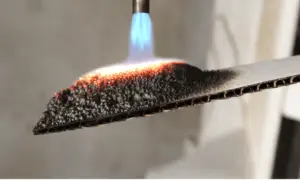
Intumescent coatings expand when exposed to heat. The expanded layer forms an insulating barrier around steel. This technique is commonly used for exposed architectural steel where aesthetics are important.
Fire-Rated Wall and Floor Assemblies
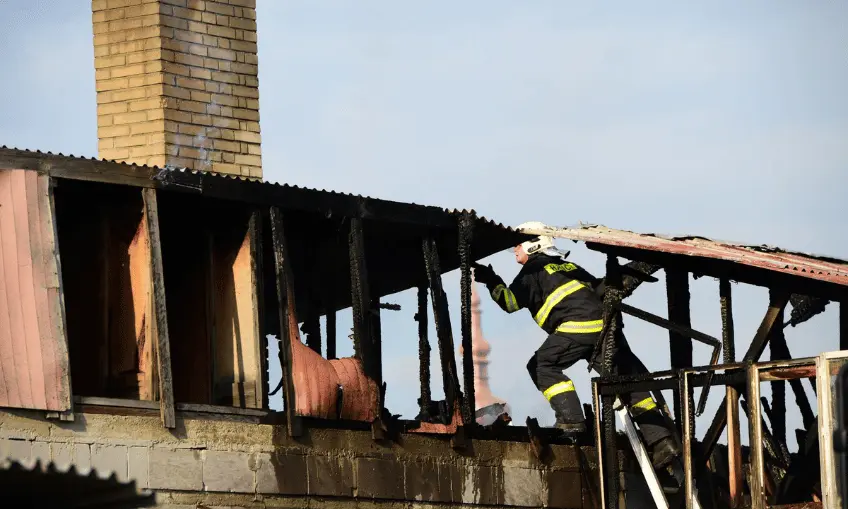
Walls and floors are constructed with tested fire-rated building materials, including gypsum board systems, concrete slabs, and masonry units. These assemblies are designed and tested in accordance with ASTM E119.
Firestopping of Penetrations
Openings created by pipes, ducts, and cables are sealed using fire-resistant sealants, collars, and pillows. This prevents fire from spreading through concealed wall cavities.
How Does Fire Compartmentation Improve Building Safety?
Fire compartmentation techniques control the spread of fire within a structure. Key compartmentation elements include:
- Fire-rated walls between occupancy zones
- Fire-rated floors between building levels
- Fire doors with self-closing mechanisms
- Fire dampers inside HVAC ducts
- Shaft enclosures for elevators and stairs
All penetrations through these systems are sealed with tested firestop systems to maintain continuity.
What Fireproofing Methods Are Used for Steel and Concrete?
Many architects and builders use concrete and steel fire protection techniques that include:
- Spray-applied fire-resistive materials (SFRM)
- Intumescent coatings for exposed steel
- Gypsum board encasement systems
- Concrete encasement in heavy-load structures
These methods determine how long structural elements can resist fire under the fire resistance requirements in buildings. This is why understanding fireproofing methods for construction is really important for architects.
How Do Fire-Rated Assemblies Improve Safety?
Fire-rated assemblies are pre-tested construction systems that combine multiple materials. Common assemblies include:
- 1-hour gypsum wall systems
- 2-hour masonry partitions
- Fire-rated ceiling systems with suspended protection layers
- Shaft wall assemblies for vertical circulation zones
These systems are selected based on occupancy type and required rating under the IBC (International Building Code). Assemblies ensure predictable performance instead of relying on individual material behavior.
Fire Resistance Ratings and Construction Systems
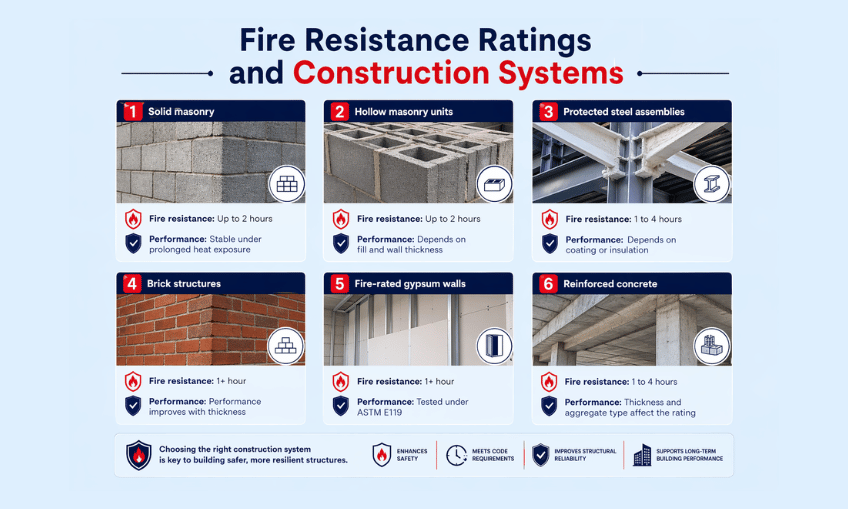
This table summarizes the typical fire resistance ratings of common construction materials and systems, along with major factors that influence their performance.
| Construction Material | Common Fire Resistance Rating | Performance Notes |
| Solid masonry | Up to 2 hours | Stable under prolonged heat exposure |
| Hollow masonry units | Up to 2 hours | Depends on fill and wall thickness |
| Protected steel assemblies | 1 to 4 hours | Depends on coating or insulation |
| Brick structures | 1+ hour | Performance improves with thickness |
| Fire-rated gypsum walls | 1+ hour | Tested under ASTM E119 |
| Reinforced concrete | 1 to 4 hours | Thickness and aggregate type affect the rating |
Active vs Passive Fire Protection Techniques
Active fire protection includes systems that respond to fire events, while passive fire protection remains embedded in the building structure. Examples of active fire protection are sprinkler systems, alarms, and smoke detectors. Passive fire protection, on the other hand, includes fire-rated walls, concrete fire resistance systems, and gypsum board fire assemblies.
Architects design buildings with both systems to create layered safety performance. Active systems control fire growth in early stages. Passive systems maintain structural fire protection strategies during extended exposure periods. NFPA standards define performance expectations for both categories and guide system integration.
What Smoke Control and Fire Safety Techniques Are Used?
Smoke control techniques manage visibility and the movement of toxic gases. Common methods include:
- Stairwell pressurization systems
- Smoke control systems
- Zoned HVAC shutdown controls
- Fire damper activation in duct systems
These systems work with passive construction to maintain evacuation routes. Smoke movement often causes more casualties than flames, making control systems critical in modern design.
What Building Codes Apply to Fire-Resistant Construction?
Fire resistance performance is verified through standardized testing. Major compliance methods include:
- ASTM E119 fire endurance testing
- NFPA system certification standards
- IBC compliance classification for occupancy
- Third-party listing of fire-rated assemblies
Note: These tests evaluate time-to-failure, structural stability, and heat transfer behavior.
Final Thoughts on Fire-Resistant Construction Techniques
Fire-resistant construction uses tested materials and design methods to slow fire spread and protect structural stability. These systems help maintain safe evacuation time and reduce damage during fire events. Proper application of codes and standards ensures buildings perform reliably under fire conditions and improve overall occupant safety.
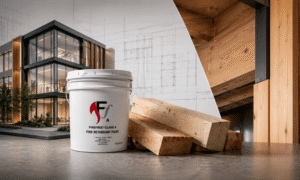
At Firefree Coatings, we offer a non-toxic, water-based intumescent fire-resistant paint designed to support modern construction techniques. When exposed to heat, it expands to form a protective insulating layer that slows fire spread and enhances structural safety. It can be applied to gypsum board, concrete, steel, wood, plaster, and composite building materials.