
Structural steel plays a central role in modern commercial construction because of its strength and flexibility. However, its performance under fire conditions requires careful attention. Fire retardant coatings for structural steel help delay the rise in temperature and maintain structural stability during fire exposure. Architects and builders often evaluate intumescent coatings for steel when balancing safety with design intent.
They always look for products that are compliant with ASTM standards and deliver reliable fire performance, durability, and ease of application. In this blog, we’ll explore the most effective fire coating options for structural steel and how to choose the right system for commercial applications.
Steel may bend, but fire won’t end, with coatings that protect and defend
Why Fire Protection Is Important for Structural Steel?
Steel performs reliably in everyday conditions, which is why it is widely used in commercial buildings. The situation changes once temperatures start rising during a fire. As heat increases, the material gradually loses its strength and stiffness. This process begins at around 300°C and becomes much more severe after 400°C, which is why early fire protection plays such an important role in structural safety.
By the time temperatures reach about 550°C, steel can lose a significant portion of its capacity. It retains about 60% of its original strength and roughly 45% of its stiffness. At this stage, the structure may no longer be able to support its intended loads. Without proper fire protection in place, this reduction can lead to very serious structural damage or even collapse.
What Are the Types of Fire Retardant Coatings for Structural Steel?
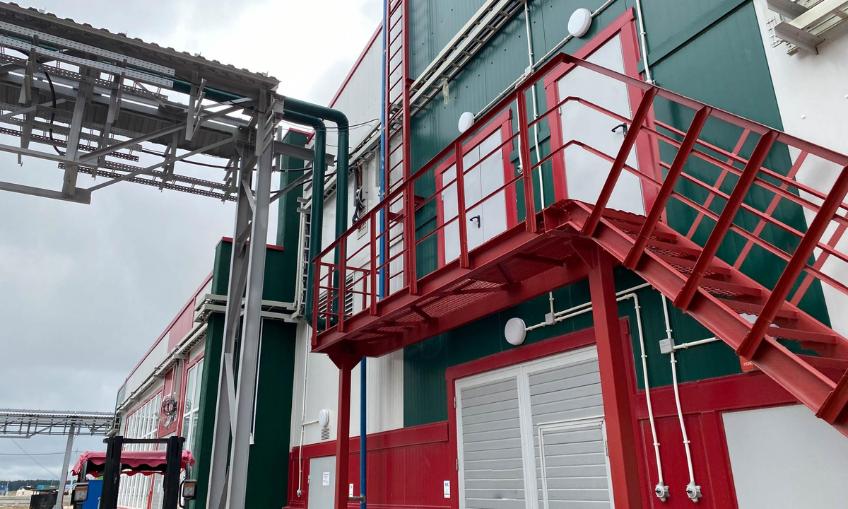
Commercial projects generally rely on three primary categories of intumescent coatings for steel. These systems include water-based, solvent-based, and epoxy-based formulations. These coatings are tested and approved to meet the bond-strength requirements in the International Building Code, so they adhere well and resist fire as expected.
Water-Based Intumescent Coatings for Steel
Architects often choose water-based coatings for their smooth finish and low emissions. The intumescent paint for steel delivers a smooth appearance while maintaining low VOC and odor levels. This makes them ideal for indoor environments where air quality matters. Application usually takes place on-site after the steel structure is fully erected.
Solvent-Based Intumescent Coatings for Steel
If your project involves unpredictable site conditions, solvent-based coatings tend to be a more dependable choice. They give a consistent finish, but what really sets them apart is how well they handle changing weather during construction. Most options stay below 150 g/L VOC, so meeting environmental requirements is not a concern. Applicators also have more flexibility, since these coatings can be applied at lower temperatures & in semi-exposed areas such as perimeter walls or partially enclosed structures.
Note: VOC limits may vary by region. Some areas enforce stricter VOC regulations, so solvent-based coatings should be checked for local compliance.
Epoxy-Based Intumescent Coatings for Steel
For projects where durability is a top priority, epoxy-based systems are often the preferred route. These coatings build thickness quickly, which helps speed up the application process without sacrificing quality. With 100% solids and 95% solids formulations, VOC levels stay very low for these coatings. The application of intumescent paint for steel can be completed using either plural- or single-component spray equipment, depending on project requirements.
Also Read, “How Do Intumescent Coatings Protect Structural Steel?”
Comparison of Intumescent Coating Types for Structural Steel
The table below provides a quick comparison to help you evaluate which coating type best fits your project conditions.
| Coating Type | Where It Works Best | Key Features | Application Conditions | Limitations |
| Water-Based Fire Retardant Coatings for Structural Steel | Interior structural steel | Smooth finish, low VOC, low odor | Applied on-site after steel erection in stable conditions | Sensitive to moisture and humidity during application |
| Solvent-Based Fire Retardant Coatings for Structural Steel | Semi-exposed and some exterior areas | Good finish, low VOC (<150 g/L), better weather resistance | Can be used in partially exposed conditions | Requires handling of solvents and ventilation |
| Epoxy-Based Fire Retardant Coatings for Structural Steel | Industrial and exterior structural steel | High durability, strong film build, fast recoat | Applied with spray equipment for efficient thickness build-up | Higher complexity in the application process |
How to Choose the Right Fire Coating for Your Construction Project?
Fire Rating (30, 60, 120 Minutes)
The first step is to determine the fire rating required for your building project. The fire rating required for a project (30, 60, 120 minutes) determines not only the coating type but also the thickness applied. Thicker layers generally provide higher fire resistance, so contractors or architects must follow manufacturer specifications and ASTM E119 test data to achieve the desired rating.
Environment (Interior vs Exterior)
The environment where the steel will be located affects the choice of coating. Exterior steel is exposed to moisture, sunlight, and temperature changes. The coating must resist these conditions. Interior steel requires low-odor, low-emission coatings, especially in occupied areas.
Aesthetic Requirements
The appearance of the steel may be important for the project. Smooth finishes or color options may be needed where the structure is visible. The coating should provide fire protection for steel structures without affecting their designs.
Application Constraints
You should also consider how the coating will be applied. Spray systems are efficient for large areas, while brushes or rollers may be needed for smaller or more detailed areas. Surface preparation and curing time are also important factors that affect application.
Durability and Lifecycle
It’s important to understand how coatings age over time. High-quality intumescent coatings resist cracking, chalking, and delamination, even under temperature fluctuations and humidity. Routine inspections and potential recoating every 10-15 years (depending on the environment and coating type) help maintain fire protection throughout the building’s lifecycle.
Importance of Compliance and Testing Standards for Fire Coating Selection
Building Codes
Architects and builders must select fire protection systems that comply with established building codes. The International Building Code (IBC) specifies the minimum fire-resistance requirements for structural steel elements.
ASTM E119 – Fire Resistance Test
ASTM E119 is a standard test method for measuring the performance of fire-resistant coatings on steel. It shows how long a coated steel member can maintain strength under controlled test conditions. Builders and architects use this test to evaluate expected performance under fire exposure.
FM Approvals
Standards such as FM 4470 and FM 4975 address specific performance criteria for fire-resistant coatings. Intumescent coatings for steel must meet these standards and provide additional assurance of consistent performance in commercial construction projects.
Smoke and Flame Spread
Smoke development and flame spread are tested in accordance with ASTM E662 and ASTM E162. These tests provide architects with important information on how coatings behave under fire conditions, helping them choose products that ensure occupant safety.
NFPA 286 – Room Fire Behavior
NFPA 286 evaluates fire behavior in enclosed spaces, simulating real-world conditions. Compliant coatings verified by this test perform reliably in interior environments, such as ceilings and walls, when steel is present.
Final Thoughts for the Best Fire Coating Products for Structural Steel
Fire protection engineers generally recommend using fire retardant coatings for structural steel, which is important to safety and longevity. Selecting the right system, whether water-based, solvent-based, or epoxy-based, depends on fire rating, environment, aesthetics, and application needs. Plus, compliance with ASTM and building codes ensures reliable performance.
At Firefree Coatings, our Ff88 intumescent coating offers a high-performance solution for protecting structural steel in commercial buildings. Suitable for galvanized steel and aluminum, this two-hour-rated fire-resistant paint is ASTM E84 approved, ensuring compliance with rigorous safety standards.