
As an architect, you already understand the importance of fire-rated walls in your projects. These are carefully tested and certified systems designed to slow fire and heat for a specific period. Their importance becomes clear when you look at real fire data. According to the latest report by the NFPA (National Fire Protection Association), fire departments in the United States respond to around 1.38 million fires.
These incidents led to approximately 3,920 civilian deaths and 11,780 injuries, along with property damage estimated at $19 billion. These eye-opening statistics represent real lives and real losses, which is exactly why strict building codes and fire safety regulations exist. In this blog, we will explore how fire-rated wall assemblies work, their key components, and why they are essential for building safety and code compliance.
Why Fire-Rated Wall Assemblies Matter
A common mistake is thinking fire protection comes from just one material. It does not. A fire-rated wall is not just drywall with extra strength. It is a complete system where every component plays a role.
- The steel or wood studs
- The Type X gypsum board
- The spacing of fasteners
- The way joints are taped and finished
- The fire-stopping around pipes, ducts, and penetrations
Every part needs to work together within systems such as UL-tested fire-rated wall assemblies. If even one part is installed incorrectly, the entire fire rating can be compromised. This is also where fire-resistant coatings become important. When applied to structural elements or penetrations, these coatings can enhance protection by slowing heat transfer and reinforcing weak points in the assembly.
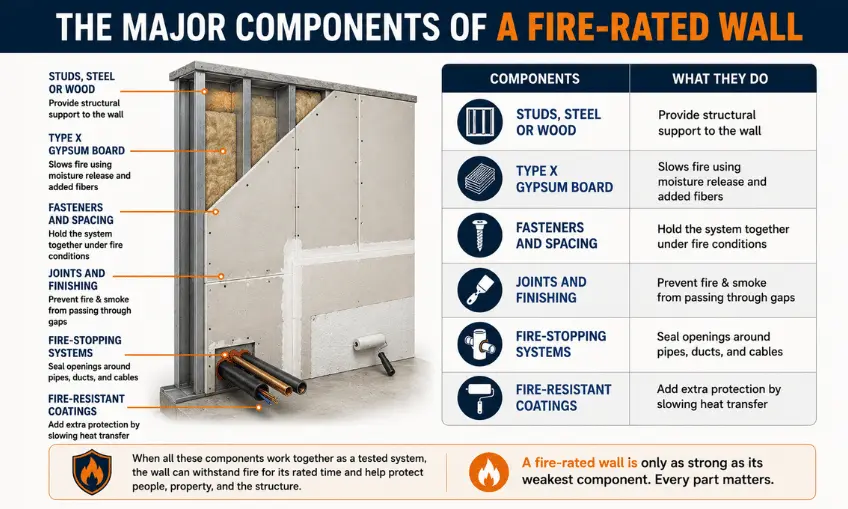
The Major Components of a Fire-Rated Wall
| Components | What They Do |
| Studs, steel or wood | Provide structural support to the wall |
| Type X gypsum board | Slows fire using moisture release and added fibers |
| Fasteners and spacing | Hold the system together under fire conditions |
| Joints and finishing | Prevent fire & smoke from passing through gaps |
| Fire-stopping systems | Seal openings around pipes, ducts, and cables |
| Fire-resistant coatings | Add extra protection by slowing heat transfer |
Why Fire-Rated Walls Are Important for Building Safety
First things first, every building, whether residential, commercial, or industrial, must meet specific fire rating requirements. For architects, these requirements depend on factors like occupancy type, building size, and layout. These often include systems such as a
- 1-hour fire-rated wall assembly for corridors or
- a 2-hour fire-rated wall assembly for separation between occupancies or units.
Modern building codes are based on the idea of fire compartmentalization. This means dividing a building into sections to contain fire and smoke within a limited area. Think of it like compartments in a ship. If one section floods, the rest of the ship stays afloat because the water is contained. Fire-rated walls work the same way. They create boundaries that prevent a fire from spreading rapidly through an entire structure.
For example, in an apartment building, someone accidentally leaves a candle burning and falls asleep. A fire starts in one unit. A 2-hour fire-rated wall assembly between apartments does not stop the fire indefinitely, but it significantly slows it.
What Are the Three Important Purposes of Fire-Rated Walls?
Fire-rated wall assemblies serve three important functions.
- First, they give people time to evacuate. Even a few minutes can make the difference between life and death, especially in high-rise buildings or for individuals with limited mobility.
- Second, they give firefighters time to respond. Fires can grow rapidly, and without compartmentalization, conditions can become uncontrollable before emergency teams even arrive.
- Third, they help limit property damage. While life safety always comes first, slowing the spread of fire through properly tested fire-rated wall assemblies also protects homes, businesses, and valuable assets.
What Makes Drywall Fire Rated
All drywall has some level of fire resistance because of its composition. It is made from gypsum, also known as calcium sulfate dihydrate. When exposed to heat, gypsum releases water as steam. This process is called calcination. That steam acts like a natural shield. It helps keep temperatures down and slows heat transfer. This is the basic reason drywall can resist fire. Fire-rated drywall takes this a step further.
Type X drywall includes glass fibers that hold the core together as water evaporates. This prevents early collapse. It is generally 5/8 inch thick and contains glass fibers.
Type C drywall goes further by adding materials like vermiculite.
These additives expand at increased temperatures and retain structural strength even after the water has been released. These enhanced systems are tested in accordance with ASTM E119 fire-test standards to validate their performance. To further improve performance, fire-resistant coatings can be applied over drywall surfaces or structural members, increasing durability and delaying thermal degradation.
Where Fire-Rated Drywall Is Commonly Used
Fire separation is mandatory in several parts of a building. Residential garages require fire-rated walls and ceilings to protect against flammable materials such as fuel and chemicals.
- Utility rooms housing furnaces or water heaters must be enclosed with fire-resistant assemblies.
- Multi-family buildings require a strong separation between units, often requiring a 2-hour fire-rated wall assembly, depending on occupancy and code requirements.
In many cases, fire-resistant coatings are also applied to structural steel and service penetrations in these areas to improve overall system performance.
How Fire-Resistant Coatings Help Walls Achieve a Fire-Rated Performance
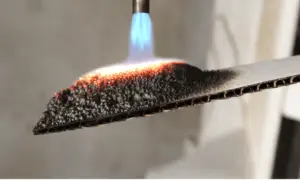
Fire-resistant coatings are widely used solutions for achieving proper fire resistance in buildings. These coatings fall under passive fire protection and are also known as intumescent or fire-resistant paint. This material can be applied to surfaces such as steel, wood, and gypsum, helping improve their fire resistance, typically for up to 1 or 2 hours.
When exposed to high temperatures during a fire, the coating expands, forming a thick insulating layer. As it expands, its density decreases while its volume increases, creating a protective barrier that slows heat transfer and shields the material beneath. This is how it helps a wall achieve a fire-rated performance.
Fire-Rated Wall Assemblies for Architectural Projects
Fire-rated wall assemblies are important for modern building safety, not just for meeting codes, but for protecting lives. By using properly tested systems and adding fire-resistant coatings where needed, architects can design safer, code-compliant spaces that slow fire spread. This provides critical time for evacuation and emergency response.
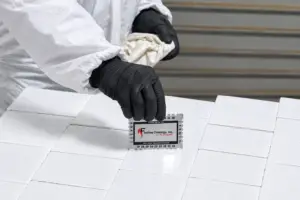
At Firefree Coatings, we understand the important role that passive fire protection plays in every architectural project. We provide high-performance intumescent retardant paints and fire-resistant coatings that enhance the durability and safety of your building systems. Our ASTM-approved paints and coatings help architects meet the compliance standards that fire-rated wall assemblies actually require.