
Fire safety matters in every building, but it becomes even more important when wood is part of the structure. Wood is beautiful and versatile, but it burns easily. That is why choosing the right protection is important. Many people compare phosphorus fire retardants and fire-retardant paint for wood when planning safer construction or renovation projects.
Both options improve fire safety, but they protect wood in very different ways. These differences can help homeowners and architects make better decisions. Each solution offers unique strengths and limitations. In this blog, we will explore how both systems work, their advantages and drawbacks, and when each option makes the most sense.
Why Fire Protection for Wood Is So Important?
Once a fire starts, untreated wood can fuel rapid flame growth. This reduces escape time and increases property damage. Fire protection coatings slow this process. They reduce ignition speed, limit flame spread, and provide people with valuable extra minutes to escape.
Those extra minutes can make an important difference during emergencies. This is why building codes often require fire protection when wood is used. Two popular choices are phosphorus fire retardants and water-based fire-retardant paint for wood.
What Are Phosphorus Fire Retardants for Paint?
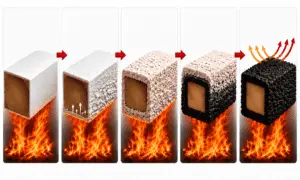
Phosphorus fire retardants are chemical additives used in coatings, plastics, and construction materials. In paints, they are used to limit how quickly flames spread and how intense the fire becomes. They primarily promote char formation. When exposed to high heat during a fire, they react to form a carbon layer for maximum protection. This char blocks oxygen and reduces flame growth.
Plus, some phosphorus fire retardants also release water vapor or inert gases during heating. These gases dilute flammable gases near the surface. This further slows ignition. Because of these properties, phosphorus fire retardants are often used in industrial coatings, intumescent paints, and protective treatments for steel and wood.
What Are the Advantages of Phosphorus Fire Retardants for Paints?
Apart from providing excellent fire resistance, phosphorus fire retardants for paints offer various benefits:
- They work well in thin coatings. This allows designers to retain natural wood textures while improving safety.
- They perform reliably in high-heat conditions. This makes them suitable for demanding environments.
What Are the Limitations of Phosphorus Fire Retardants for Paints?
Despite their strengths, phosphorus fire retardants for paints also have drawbacks:
- Many phosphorus-based compounds for paints do not handle moisture very well. In humid areas, they can absorb water from the air, which may slowly reduce their fire-resistant performance. Over time, this can affect the coating’s ability to protect the surface.
- Some formulations can also reduce the coating’s durability. The surface may feel softer and be more susceptible to scratches or damage, especially in high-traffic areas. This can shorten the lifespan of your paint and increase maintenance needs.
- In addition, phosphorus fire retardants often raise overall paint costs. High-quality phosphorus fire-retardant formulations usually cost more than basic alternatives, which can increase both material and application expenses.
Because of these factors, careful formulation and proper application are essential.
What Is Water-Based Fire-Retardant Paint for Wood?
Water-based fire-retardant paint for wood is used specifically for wooden surfaces. It uses water as the primary carrier and contains fire-retardant chemicals that activate upon exposure to heat. When a fire starts, these paints expand, forming an insulating, foam-like layer.
This layer protects the wood by blocking heat and oxygen. The swelling action is known as intumescence. These paints are popular for residential and light commercial use. They are easy to apply, low-odor, and safer for indoor environments. They also meet strict ASTM safety standards for interior applications.
What Are the Advantages of Water-Based Fire-Retardant Paint for Wood?
Water-based fire-retardant paint for wood offers many practical benefits.
- It is easy to apply using brushes, rollers, or sprayers. Most contractors and homeowners can use it without special equipment.
- It produces very low odor and low emissions. This makes it safer for indoor use and occupied spaces.
- It dries quickly. Projects can move forward without long waiting times.
- It provides excellent flame spread reduction. Many products achieve Class A fire ratings.
- It maintains the appearance of wood. Many formulas are clear or lightly tinted.
What Are the Limitations of Water-Based Fire-Retardant Paint for Wood?
While water-based systems perform well, they also have fewer limitations than phosphorus fire retardants, including:
- They rely heavily on proper surface preparation. Poor cleaning or sanding can reduce adhesion and protection.
- Rain and humidity can reduce paint performance if not properly sealed.
Phosphorus Vs. Water-Based Fire Retardant Paint for Wood
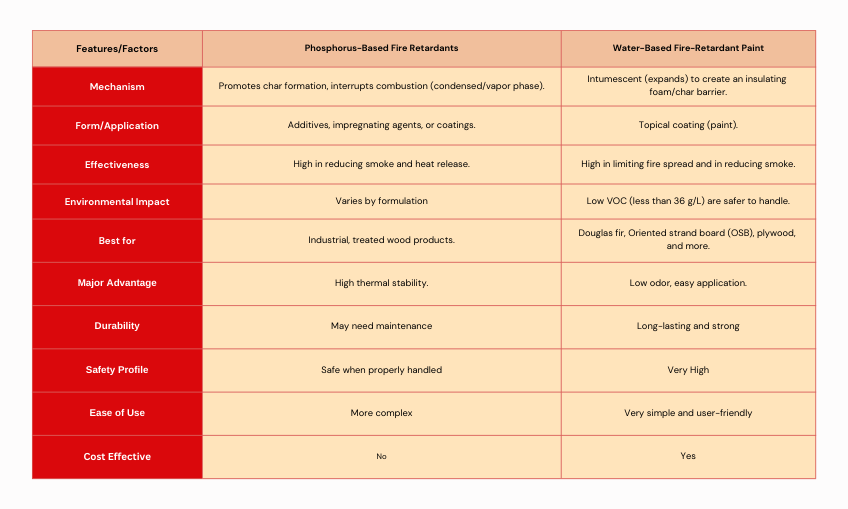
| Features/Factors | Phosphorus-Based Fire Retardants | Water-Based Fire-Retardant Paint |
| Mechanism | Promotes char formation, interrupts combustion (condensed/vapor phase). | Intumescent (expands) to create an insulating foam/char barrier. |
| Form/Application | Additives, impregnating agents, or coatings. | Topical coating (paint). |
| Effectiveness | High in reducing smoke and heat release. | High in limiting fire spread and in reducing smoke. |
| Environmental Impact | Varies by formulation | Low VOC (less than 36 g/L) are safer to handle. |
| Best for | Industrial, treated wood products. | Douglas fir, Oriented strand board (OSB), plywood, and more. |
| Major Advantage | High thermal stability. | Low odor, easy application. |
| Durability | May need maintenance | Long-lasting and strong |
| Safety Profile | Safe when properly handled | Very High |
| Ease of Use | More complex | Very simple and user-friendly |
| Cost Effective | No | Yes |
How to Choose the Right Paint for Your Project?
Both phosphorus fire retardants and fire-retardant paint for wood offer effective fire protection. The best option depends on your environment and safety goals.
- For residential interiors, offices, and schools, water-based fire-retardant paint for wood offers safe, simple, and cost-effective protection.
- For industrial buildings, warehouses, and heavy-duty commercial spaces, phosphorus fire retardants may offer significant fire resistance.
Final Thoughts on Phosphorus Fire Retardants Vs. Fire-Retardant Paint
Choosing the right fire protection for wood is not just about meeting building codes. It is about protecting lives, property, and peace of mind. Both phosphorus fire retardants and water-based fire-retardant paint for wood play important roles in improving fire safety, but they serve different needs and environments.
At Firefree Coatings, our Firefree Class A solution is specifically engineered to protect wood-based substrates. This includes Douglas fir, oriented strand board (OSB), plywood, and similar materials. Our high-performance, water-based fire-retardant paint is non-toxic, single-component, and forms a thin intumescent film that delivers exceptional fire protection. Contact us today to learn more about protecting your wood surfaces.