
A fireplace can change the feel of your home. However, the area around it faces intense heat and occasional sparks. Regular paint cannot survive these conditions. This is why choosing the right coating matters. Many homeowners feel confused when deciding between heat-resistant and fire-resistant paint for a fireplace surround.
Even though they sound similar, their functions are quite different. The right choice keeps your fireplace surround safe, durable, and good-looking for years. Heat-resistant paint for a fireplace surround handles high temperatures, while fire-resistant paint focuses on slowing down flames. In this blog, we inform you about the major differences between these two paints for a fireplace surround.
What Is Heat-Resistant Paint for a Fireplace Surround?
Heat-resistant paint for a fireplace surround is applied to handle high temperatures without cracking, peeling, or discoloring. This paint forms a durable coating that stays intact even when exposed to intense heat from logs or gas flames. Most heat-resistant paints contain silicone or ceramic-based ingredients. These components help the paint maintain its structure even when temperatures rise above normal limits.
Some products can tolerate heat up to 600°C or more. This makes them ideal for surfaces close to fire sources. This paint works best on metal, masonry, brick, and stone surfaces. Many people use it on fireboxes, mantels, and the surrounding walls. It also helps prevent rust and surface damage.
Over time, repeated heating and cooling cycles can weaken ordinary paint. This paint avoids this problem. Heat-resistant paint for a fireplace surround also offers a clean and modern look. It comes in various finishes and colors. This allows you to match it with your interior style without compromising safety.
What Is Fire-Resistant Paint for a Fireplace Surround?
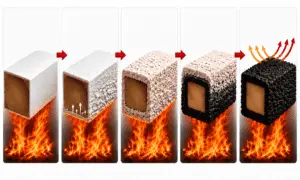
Fire-resistant paint works in a completely different way. It does not focus on handling heat. Instead, it slows down the spread of flames when a fire starts. This delay gives people valuable time to respond, escape safely, or control the fire.
Fire-resistant paint often contains compounds that swell when exposed to high heat. This swelling creates a thick insulating layer that shields the surface beneath. This barrier reduces flame spread and limits damage.
Fire-resistant paint works best on flammable materials near fireplaces. Wood trim, plywood, oriented strand board, Douglas fir, and similar materials benefit the most. These surfaces are prone to ignition, making fire-resistant paint a valuable safety measure.
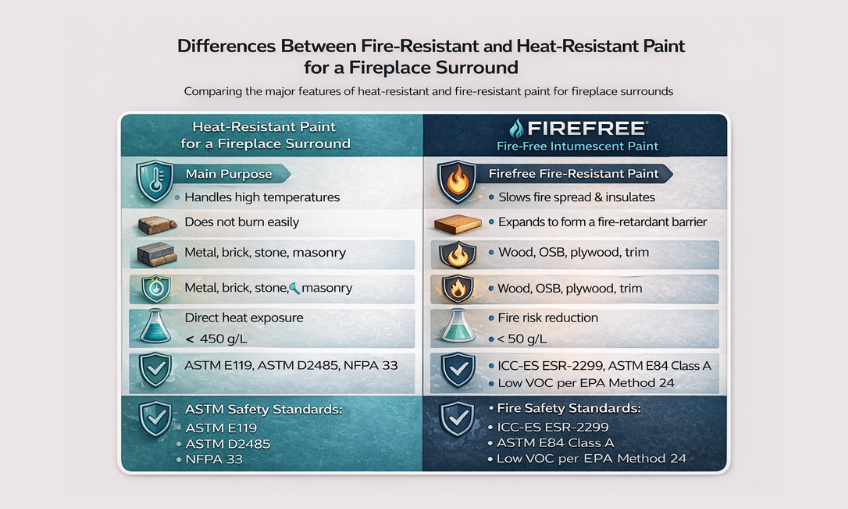
Differences Between Fire-Resistant and Heat-Resistant Paint for a Fireplace Surround
| Features | Heat-Resistant Paint for a Fireplace Surround | Fire-Resistant Paint |
| Main purpose | Handles high temperatures | Slows flame spread |
| Best for | Metal, brick, stone, masonry | Wood, OSB, plywood, trim |
| Reaction to fire | Does not burn easily | Expands to form insulation to give enough time to evacuate |
| Fire protection | Limited | Strong |
| Typical use | Direct heat exposure | Fire risk reduction |
| VOC Profile | 450 g/L | Less than 36 g/L |
| Fire Safety Standards | ASTM E119, ASTM E84, ASTM D2485, and NFPA 33 | Chapter 7A CBC, ICC ESL Listings (1205,1206,1213 CAN/ULC), ASTM E84, California State Fire Marshal, ASTM D5116 Organic Emissions, Low VOC per ASTM D3960 |
Application Tips for Fire-Resistant and Heat-Resistant Paint
Good surface preparation is key to getting the best results from either paint. Clean the surface completely before painting. Remove dust, soot, grease, and old paint flakes. A clean surface allows the fire or heat-resistant paint to bond properly. You need to follow the manufacturer’s instructions very carefully. Many heat-resistant paints require thin coats and proper curing time.
Some products need heat exposure to fully set. Fire-resistant paint may require multiple layers for full effectiveness. Use high-quality brushes, sprayers, or rollers. Apply even coats & allow each layer to dry fully. Good ventilation during painting is also important, as some products release mild odors during application.
Durability and Maintenance Considerations for Fire and Heat-Resistant Paint
Heat-resistant paint for a fireplace surround offers long-term durability when applied correctly. This paint resists peeling, cracking, and fading. You can perform occasional cleaning with a soft cloth to help maintain its appearance. Fire-resistant paint also lasts for years, but it may need inspection over time. Surface damage or wear can reduce its protective ability. Recoating ensures consistent performance. Regular maintenance extends the life of both coatings. Simple care helps preserve both safety and appearance.
Why Fire-Resistant Paint Still Matters for a Fireplace?
Even though heat-resistant paint for a fireplace surround is often the first choice, fire-resistant paint plays an important role in home safety. Fires can spread quickly, and protective coatings can slow that process. Fire-resistant paint can protect nearby items from fire.
In areas close to fireplaces, this extra layer of protection makes a real difference. Homeowners who want a higher level of safety often combine both options. This approach offers balanced protection and peace of mind.
Heat-Resistant Vs. Fire-Resistant Paint: Cost Comparison
Heat-resistant paint for a fireplace surround often costs slightly more than regular paint. However, it offers better performance and longer life. Over time, it reduces repainting costs.
Fire-resistant paint may vary in price based on certification and thickness. It is generally more affordable than heat-resistant paint. Both options offer strong value when used correctly. Selecting the correct paint for each purpose helps avoid problems later and improves overall safety.
Final Thoughts on Fire-Resistant Vs. Heat-Resistant Paint for a Fireplace Surround
Choosing between heat-resistant paint for a fireplace surround and fire-resistant paint depends on your priorities. For everyday fireplace use, heat-resistant paint provides durability, appearance, and heat tolerance. Fire-resistant paint plays a major role in overall home safety. It helps slow fire spread and protects vulnerable surfaces.
At Firefree Coatings, we understand the importance of choosing the right protective solutions for fireplace surrounds and nearby surfaces. Our Firefree Class A paint is specially designed for wooden and combustible materials used around fireplaces. It offers superior fire resistance while meeting all ASTM E84 standard requirements, including the 30-minute extended test.